BMW 5 Series Generations Ranked: E39 to G30
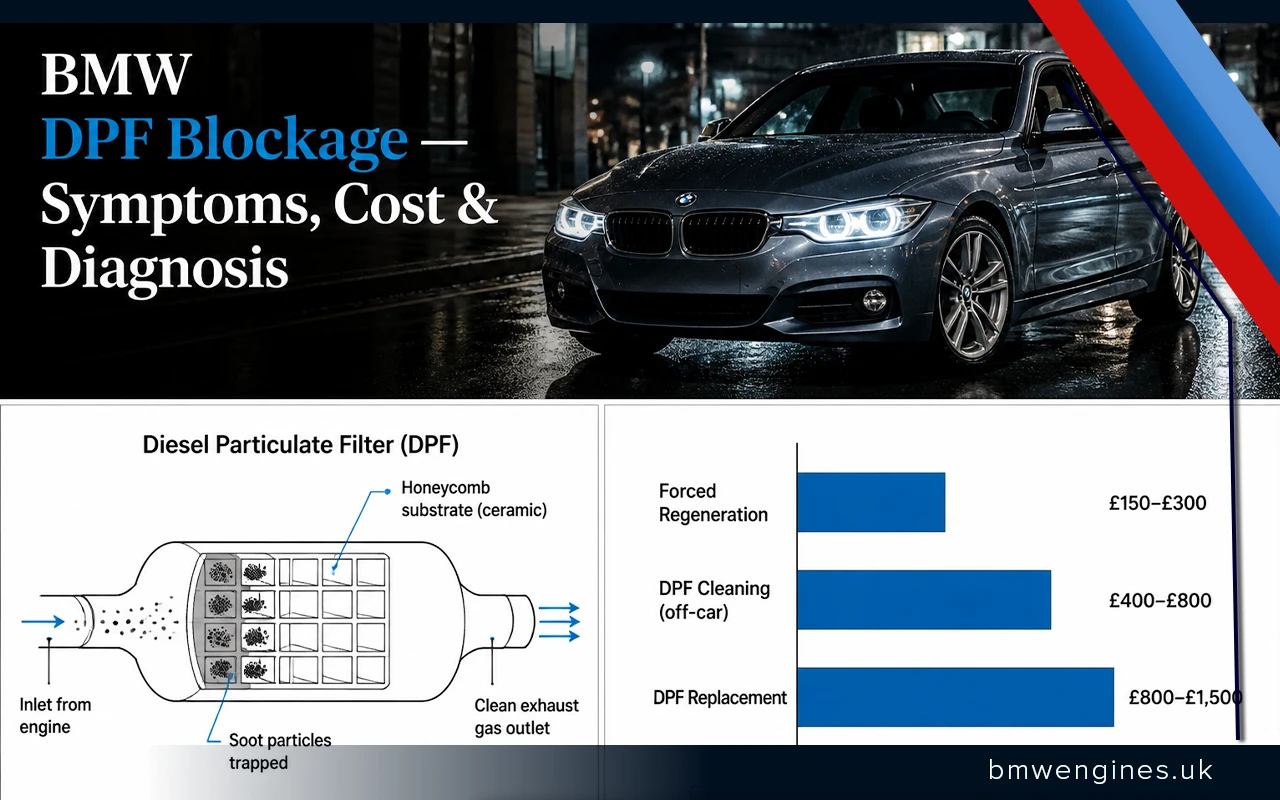
The 5 Series generation to buy is the G30 (✅ Safe), with the F10 (⚠️ Watch) a workhorse if you avoid the N57, while the E60 (🔴 Scrap Threshold) is a scrap-risk with a £4,350 N47 recon cost exceeding the car's £2,500 value.
The BMW 5 Series has been the executive saloon benchmark for decades. But if you're buying used, the generation you choose matters more than the badge on the boot. Some are bulletproof. Some are money pits. And one is a genuine scrap-risk for most buyers.
We've ranked every modern 5 Series generation—E39, E60, F10 and G30—using our proprietary UK enquiry data, real replacement costs and current market values. Here's which one actually makes sense to buy in 2026.
The Short Answer
The G30 (2017–2023) is the clear winner — B47/B57 engines are reliable, replacement costs are comfortably within vehicle values, and it's the best ownership experience of the four.
The F10 (2010–2017) is the best-value compromise — but only if you avoid the N57 diesel. The N47 is a workhorse; the N57 is a £5,750 risk on an £8,000 car.
The E60 (2003–2010) is a scrap-risk for most buyers — a £4,350 reconditioned N47 costs more than the car's typical £2,500 value. Buy it only as a DIY classic.
The E39 (1996–2003) is a classic, not a daily — low request volume (33 in 2025), but replacement costs regularly exceed the car's value. Keep it as a weekend car.
Generation Comparison Table
Generation (Chassis)
Years
Primary Engines
Request Volume [EM-VERIFIED]
Typical UK Value [THIRD-PARTY]
Recon Cost
R-to-V Flag
Verdict
E39
1996–2003
M54 petrols, M57 diesels
33
£2,000–£6,000
£2,500–£5,000
🔴 Scrap Threshold
A classic, but engine replacement is rarely cost-effective for daily drivers
E60
2003–2010
N47D20C / N57D30
226
£2,000–£7,000
£3,200–£7,000
🔴 Scrap Threshold
N47 and N57 engines make it a scrap-risk; avoid unless you're a DIY enthusiast
F10
2010–2017
N47D20C / N57D30
300
£5,000–£16,000
£3,200–£7,000
⚠️ Watch
The most popular 5 Series; N57 risk on pre-2016, N47 workhorse on lower spec
G30
2017–2023
B47D20A / B57D30
177
£14,000–£30,000
£2,800–£8,000
✅ Safe
The modern choice; reliable engines, high values, and the best ownership experience
Based on UK enquiry data from January–December 2025 [EM-VERIFIED]. Vehicle values sourced from AutoTrader, Motors.co.uk 2024–2025 [THIRD-PARTY].
E39 (1996–2003) — The Classic That Still Costs
The E39 is the one enthusiasts talk about in hushed tones. And for good reason—it's beautifully built, handles superbly, and the M5 is still a legend. But the E39 you can actually afford today is a very different proposition from the one collectors pay top dollar for.
What changed
The E39 introduced the M57 diesel to the 5 Series—a six-cylinder turbo diesel that, in its time, was a revelation. The petrol M54 engines are also well-regarded. But this is a car that's now 20–30 years old. Rubber perishes. Electronics fail. And when the engine goes, it's rarely worth saving.
What breaks
The M57 is generally robust, but the E39's age means you're dealing with old car problems: cooling system failures on the M54, injector wear, and rust. The engine itself isn't the primary concern—it's everything around it.
What it's worth now
£2,000–£6,000 [THIRD-PARTY], depending on condition and spec. The problem is that a replacement engine—whether M54 or M57—costs £2,500–£5,000 [EM-QUOTE]. That means you're looking at a repair bill that could easily match the car's value.
Buying checklist
Rust: Check rear subframe mounts, jacking points and arches
Cooling system: M54 water pumps and expansion tanks fail frequently
Service history: A neglected E39 is a money pit—insist on full records
Electrics: Window regulators, pixelated dash displays and central locking all fail with age
Our verdict: Buy an E39 as a classic, not a daily. If you need a reliable 5 Series to get to work, look elsewhere.
E60 (2003–2010) — The Scrap-Risk
The E60 is the generation everyone warns you about. And with good reason. It's the one that gave the 5 Series its reputation for catastrophic engine failure. But is it really that bad?
What changed
The E60 introduced the N47 diesel to the 5 Series—an engine that's now infamous for its rear-mounted timing chain. It also brought the N57 six-cylinder diesel and a polarising Chris Bangle design that hasn't aged as badly as some predicted.
What breaks
The N47's timing chain is the headline failure. It's mounted at the back of the engine, against the gearbox—which means the engine has to come out to replace it. A £650 chain becomes a £3,200–£5,500 recon job [EM-QUOTE]. The N57 has similar issues, plus turbocharger wear and oil pump failures.
The timing chain typically fails between 60,000 and 120,000 miles [EM-VERIFIED]. Cold-start rattle is the early warning. Ignore it, and you're looking at a full engine replacement.
What it's worth now
£2,000–£7,000 [THIRD-PARTY]. But the N47 recon cost is £4,350 at midpoint. On a £2,500 car, that's 174% of the vehicle's value. That's why we flag it as 🔴 Scrap Threshold.
Buying checklist
Timing chain: Listen for cold-start rattle—walk away if you hear it
Service history: N47s need 5,000–8,000-mile oil changes; anything less is a red flag
Turbo health: On N57 cars, check for whistling or loss of power
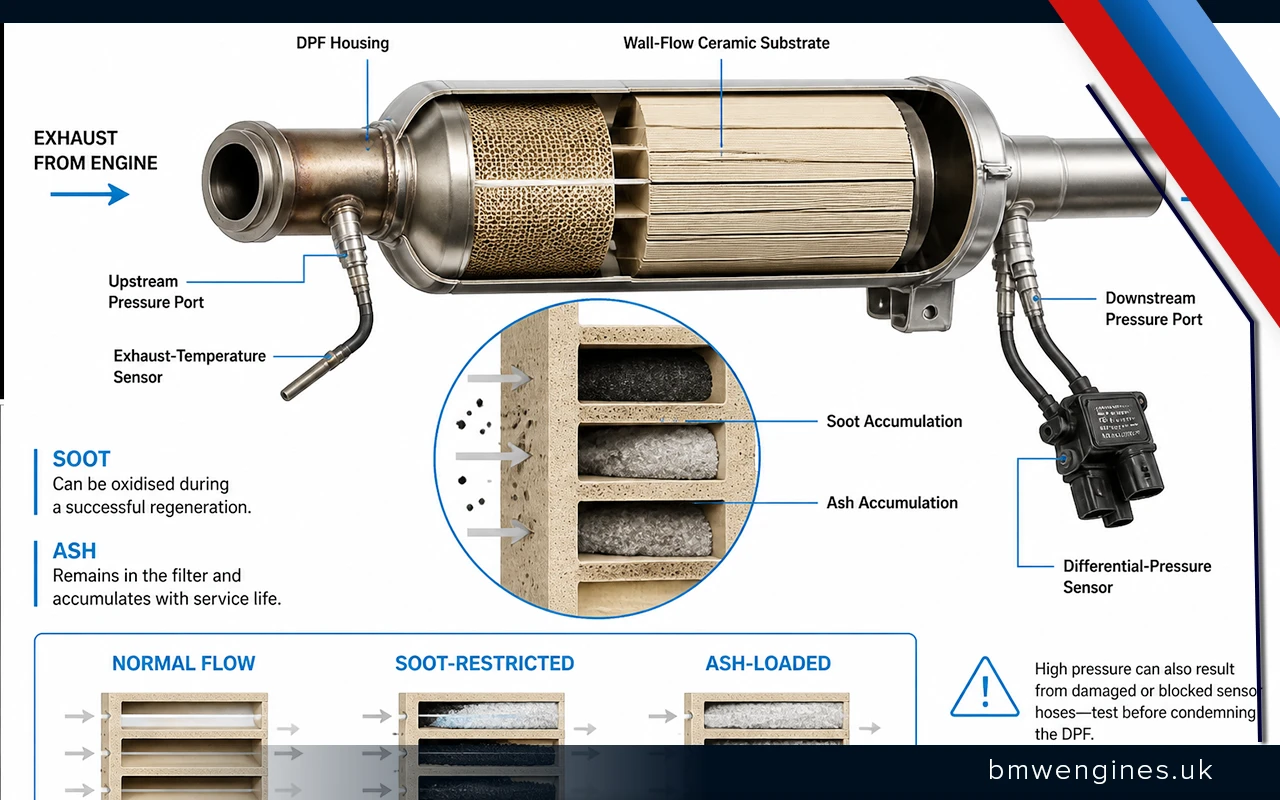
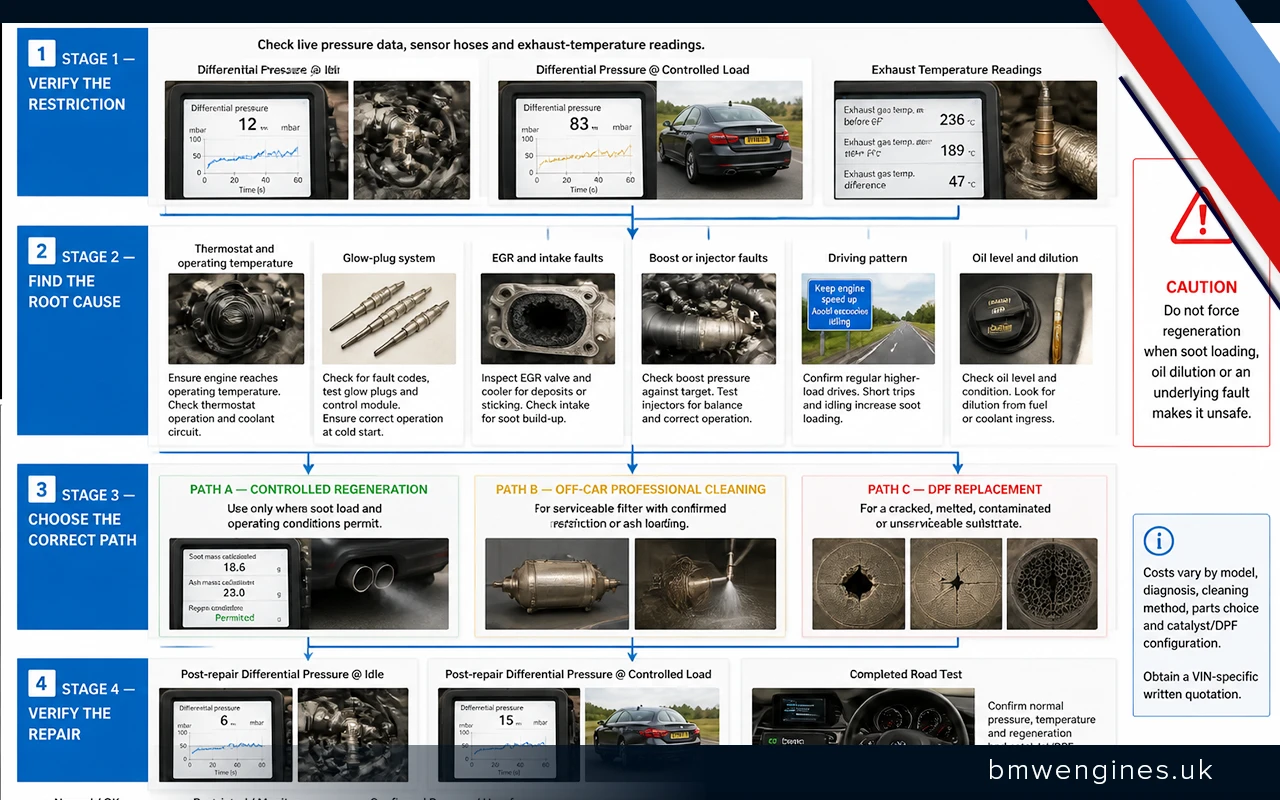
DPF: Diesels used only for short trips will have clogged particulate filters
A note for DIY enthusiasts
If you can do the work yourself—and we mean engine-out work—an E60 can be a cheap classic. Parts are available, the car is relatively simple compared to modern BMWs, and the driving experience is still excellent. But for anyone paying a garage, the numbers don't work.
Our verdict: For 90% of buyers, the E60 is a hard no. The N47 and N57 engine risks make it a scrap-risk unless you're a skilled DIYer with time and space.
F10 (2010–2017) — The Workhorse
The F10 is the most popular 5 Series in our data, with 300 enquiry requests in 2025 [EM-VERIFIED]. And that's partly because it's the sweet spot—modern enough to be reliable, old enough to be affordable. But there's a catch.
What changed
The F10 was BMW's sixth-generation 5 Series, and it's where the modern 5 Series really came into its own. Improved suspension, better interiors and a more refined driving experience. But the engines were largely carried over from the E60—which is both good and bad news.
What breaks
The N47 timing chain issue persists on pre-2016 cars [EM-VERIFIED]. BMW revised the timing chain guides around 2015, so later cars are less risky. The N57 also suffers from timing chain stretch and turbocharger wear, with repairs costing £4,500–£7,000 for a reconditioned engine [EM-QUOTE].
But here's the good news: the N47 on lower-spec cars (520d) is a known quantity. With proper maintenance—5,000–8,000-mile oil changes, timing chain inspection—it can run for 200,000+ miles.
What it's worth now
£5,000–£16,000 [THIRD-PARTY]. With a recon N47 costing £3,200–£5,500, that's 87% of the lower end of the value range. It's on the border—which is why we flag it as ⚠️ Watch.
Buying checklist
Engine: Avoid pre-2016 N57 cars unless you have a documented timing chain replacement
Service history: Look for oil changes every 6,000–8,000 miles—BMW's 18,000-mile interval is too long for the N47
Timing chain: Cold-start rattle is still a red flag on pre-2016 cars
DPF: Check that the car has had regular motorway runs to keep the diesel particulate filter clear
Which F10 to buy
Best bet: 2016–2017 520d with the B47 engine (if you can find one)
Good bet: 2015–2017 530d with a proven service history
Avoid: 2010–2014 N57 cars without documented chain work
Avoid: Any F10 with a patchy service record—these cars are unforgiving
Our verdict: The F10 is the best-value 5 Series if you buy carefully. Avoid the early N57, look for a post-2015 car, and prioritise service history over mileage. It's a workhorse, not a show pony—and it'll treat you well if you treat it right.
G30 (2017–2023) — The Safe Bet
The G30 is the generation every other 5 Series wants to be. It's the one you buy if you want the best ownership experience, the lowest risk, and the most advanced car. It's also the most expensive—but you get what you pay for.
What changed
The G30 introduced the B-series engines—the B47D20A four-cylinder diesel and B57D30 six-cylinder diesel. These are BMW's modern modular engines, and they're a step change in reliability compared to the N-series they replaced.
The timing chain is mounted at the front of the engine, not the back. That single design decision means a £2,800–£8,000 recon cost is comfortably within the car's £14,000–£30,000 value—a 31% ratio, which is why we flag it as ✅ Safe.
What breaks
The G30 is not without issues. The B47 has an EGR cooler recall—coolant leaks into the exhaust, which is a fire risk. BMW has addressed this with a recall, so check that it's been done. The B57 is generally robust, with coolant leaks from the expansion tank being the most common complaint.
What it's worth now
£14,000–£30,000 [THIRD-PARTY]. With reconditioned B47 engines costing £2,800–£4,500 and B57s at £5,000–£8,000 [EM-QUOTE], replacement is financially viable across the board.
Buying checklist
EGR cooler: Check that the recall has been performed (BMW covers this)
Cooling system: Look for coolant leaks, particularly around the expansion tank
Service history: Full BMW service history is ideal—these are complex cars
DPF: Urban-use cars may have DPF clogging; check for regen cycles
Which G30 to buy
Best bet: Any 2017–2023 G30 with the B47 or B57 engine
Budget option: 2017–2019 cars are now entering the £14,000–£18,000 bracket
Premium option: 2020–2023 cars with the B57 have the best power-to-reliability balance
Avoid: No major pitfalls—but check the EGR recall and cooling system
Our verdict: The G30 is the best 5 Series generation to buy in 2026. It's reliable, it's modern, and it's financially viable to own. If you can stretch to one, do it.
Which Generation to Actually Buy
Buy the G30 if you can afford it. It's the most reliable, the most modern, and the most financially sensible in the long run. The B47 and B57 engines are a genuine step forward, and the G30's retained values mean replacement costs are manageable.
Buy the F10 if you're on a budget. Look for a post-2015 520d with the B47 engine (if you can find one) or a 2015–2017 530d with impeccable service history. Avoid the early N57 at all costs.
Buy the E60 only if you're a DIY enthusiast. The numbers don't work for anyone paying a garage. But if you can do the work yourself, it's a cheap classic with genuine character.
Buy the E39 as a weekend car, not a daily. It's a classic, not a workhorse. Keep it for sunny Sundays, not the school run.
Methodology and Limitations
All request volume figures are sourced from our internal CRM data at EnginesMarket.co.uk, covering 24,650 unique UK enquiries from January–December 2025 [EM-VERIFIED]. Vehicle values are third-party market data from AutoTrader, Motors.co.uk and similar sources [THIRD-PARTY]. Replacement costs are derived from actual supplier quotes sent through our CRM, cross-checked with independent specialist rates [EM-QUOTE].
Request volume measures demand for replacement engines, not failure probability. An engine with more enquiries isn't automatically "less reliable"—it may simply be more common on UK roads, or generate more enquiries per failure because it's a popular car that people want to keep on the road. We've used failure pattern data, not just enquiry volumes, to inform our reliability assessments.
Our R-to-V flags are guidance tools, not fixed rules. Rare, low-mileage, or collector-spec examples may justify replacement above the Scrap Threshold. Always have a trusted mechanic inspect a car before purchase—and always get a second opinion before committing to an engine replacement.
FAQ
Is the BMW E60 really that bad?
The E60 itself isn't the problem—it's the N47 and N57 engines fitted to most diesels. The rear-mounted timing chain design makes replacement labour-intensive and expensive. On a car worth £2,000–£7,000, a £4,350+ reconditioned engine often exceeds the vehicle's value. The E60 can be a good buy only if you're a DIY enthusiast who can do the work yourself.
Which 5 Series generation is most reliable?
The G30 (2017–2023) with the B47 or B57 engines is the most reliable modern 5 Series. The B-series engines have front-mounted timing chains, far fewer catastrophic failure modes, and the cars are new enough that most are still well-maintained. The F10 with the B47 (2015–2017) is also a good bet, but avoid the early N57.
What's wrong with the F10 N57 engine?
The N57 is a six-cylinder diesel that suffers from timing chain stretch, turbocharger wear and oil pump failure—typically between 80,000 and 150,000 miles. Replacement costs £4,500–£7,000 for a reconditioned unit [EM-QUOTE]. On a £5,000–£8,000 F10, that's 60–90% of the car's value. Pre-2016 cars are the highest risk; later cars are improved but still require careful inspection.
Should I buy a high-mileage G30?
The G30's B47 and B57 engines are robust, with many owners reporting 150,000+ miles without major issues. The key is service history—these cars need proper maintenance. Check that the EGR cooler recall has been performed, look for evidence of regular oil changes (every 8,000–10,000 miles), and verify that the car has had regular motorway runs to keep the DPF clear. A well-maintained high-mileage G30 can be a very good buy.
Closing Verdict
The BMW 5 Series generation ranking is clear: G30 first, F10 second, E60 and E39 a distant third and fourth. The G30 is the safest, most reliable and most financially sensible choice—but the F10 offers genuine value if you're careful with the engine. The E60 is a scrap-risk for most buyers, and the E39 is best kept as a classic.
If you're buying a used 5 Series in 2026, prioritise the G30. If you can't stretch to one, buy a post-2015 F10 with the B47 engine. And if you're tempted by an E60, make sure you're ready for the work—or the bill.
[Image 1 — CTR]
Filename: bmw-5-series-generations-ranked-hero.webp
Alt text: BMW 5 Series generations E39, E60, F10, and G30 ranked from best to worst.
Placement: After the intro.
Prompt:
A photorealistic, high-detail editorial photograph in a clean professional workshop with controlled studio lighting. Four BMW 5 Series saloons are arranged in a precise line, evenly spaced and shot straight on, ordered left to right as E39, E60, F10, G30. In front of each car sits a small white placard card with a bold navy title and a smaller line beneath, reading exactly: "E39 — 🔴 Scrap", "E60 — 🔴 Scrap", "F10 — ⚠️ Watch", "G30 — ✅ Safe". Engine components relevant to each generation are knolled in tidy rows on a stainless bench in the foreground—timing chains, tensioners, cylinder heads.
Across the top runs a deep navy header bar with "BMW RELIABILITY GUIDE" centred in white.
Overlaid in the left third, heavy condensed sans-serif: "5 SERIES GENERATIONS RANKED" in white, with "E39 | E60 | F10 | G30" beneath in BMW blue (#0166B1). Generous negative space.
16:9. Photorealistic. No watermarks. No visible registration plates or VINs. All text rendered perfectly and spelled exactly as specified.
[Image 2 — Decision]
Filename: 5-series-generation-comparison.webp
Alt text: BMW 5 Series generation comparison table showing R-to-V flags for E39, E60, F10, and G30.
Placement: After the generation table.
Prompt:
A photorealistic, high-detail editorial photograph of a clean workshop desk with controlled studio lighting. A large printed comparison table sits on the desk, clearly showing the four BMW 5 Series generations with their R-to-V flags—E39 🔴 Scrap, E60 🔴 Scrap, F10 ⚠️ Watch, G30 ✅ Safe—and key data points including request volumes and recon costs. A red marker pen and coffee cup sit beside the table. In the background, blurred but recognisable, a G30 5 Series is visible through a workshop window.
Across the top runs a deep navy header bar with "BMW RELIABILITY GUIDE" centred in white.
Overlaid in the left third, heavy condensed sans-serif: "GENERATION COMPARISON" in white, with "E39 (Scrap) | E60 (Scrap) | F10 (Watch) | G30 (Safe)" beneath in BMW blue (#0166B1). Generous negative space.
4:3 in-body. Photorealistic. No watermarks. No visible registration plates or VINs. All text rendered perfectly and spelled exactly as specified.
[Image 3 — Explanation]
Filename: bmw-5-series-r-to-v-flag-explainer.webp
Alt text: BMW 5 Series R-to-V flag explanation showing replacement cost versus vehicle value for E60, F10, and G30.
Placement: After the methodology section.
Prompt:
A photorealistic, high-detail editorial photograph of a clean workshop whiteboard with controlled studio lighting. The whiteboard shows a clear visual comparison of replacement cost versus vehicle value for the three main 5 Series generations—E60 (🔴 Scrap): £4,350 recon cost on £2,500 car = 174%, F10 (⚠️ Watch): £4,350 recon cost on £5,000 car = 87%, G30 (✅ Safe): £4,350 recon cost on £14,000 car = 31%. A mechanic's hand points to the G30 column with a marker pen. Workshop tools and engine components are visible in the background.
Across the top runs a deep navy header bar with "BMW RELIABILITY GUIDE" centred in white.
Overlaid in the left third, heavy condensed sans-serif: "REPLACEMENT-TO-VALUE RATIO" in white, with "E60 (174%) | F10 (87%) | G30 (31%)" beneath in BMW blue (#0166B1). Generous negative space.
4:3 in-body. Photorealistic. No watermarks. No visible registration plates or VINs. All text rendered perfectly and spelled exactly as specified.
Need a Replacement BMW Engine?
Get an instant quote for reconditioned or tested low-mileage BMW engines with full warranty coverage.